Ask people their lucky number and most will give you an answer with no real reasoning behind it. Numerology, the study of numbers as distinct energetic forces with consistent patterns and personalities, has something more specific to offer, and it has been remarkably consistent across thousands of years and multiple independent traditions.
The short answer: The luckiest number in numerology is most widely considered to be 7. Across Pythagorean, Chaldean, and several cultural traditions, 7 represents spiritual wisdom, intuition, and inner truth. Numbers 3, 8, and 9 rank close behind, each carrying a different type of auspicious energy. Your personal lucky number ties directly to your birthdate and full name, making it specific to you rather than universal.
A note upfront: Numerology is a long-standing cultural and spiritual tradition, not a scientific system. This article explores it as an entertaining lens for self-reflection and makes no claims about predicting outcomes.
This guide covers which numbers are universally considered lucky, how to calculate your personal lucky number from your name and birthdate, what each number actually means, and which popular beliefs about lucky numbers deserve more skepticism than they usually get.
What Makes a Number “Lucky” in Numerology?
In numerology, a number becomes “lucky” when its vibrational pattern is associated with flowing, outward energy: creativity, wisdom, abundance, or connection. The Pythagorean system (the most widely practiced in the West) assigns each number from 1 to 9 a distinct character. Lucky numbers are those whose energy tends to open possibilities rather than close them.
Numerology operates through three main schools. Pythagorean numerology, developed by the Greek philosopher Pythagoras around 570-495 BCE, assigns values 1 through 9 to letters A through Z in a repeating sequence and treats each number as carrying a specific vibrational frequency. Chaldean numerology, older and rooted in Babylonian tradition, uses a different letter-value system and treats 9 as sacred, so rarely assigned to letters that it functions almost as a number apart. Vedic numerology, from Indian astrological scholarship, links each number to a planetary ruler, making certain numbers favorable depending on your birth date and cosmic positioning.
What gives these traditions weight beyond simple folklore is their independent consistency. The number 7 holds lucky associations in ancient Greek philosophy, in biblical canon, in Chinese folk tradition, and in Indian Vedic astrology. These are systems that developed in near-complete isolation from one another. That kind of convergence is not scientific evidence, but it is also not coincidence in the usual sense.
The single most useful distinction to hold early: universal lucky numbers appear favorable for most people across most traditions. Personal lucky numbers come specifically from your birthdate and name. The most meaningful numerological picture comes from understanding how both layers interact, not from adopting one universally “lucky” number and assuming it applies to you automatically.
How Do You Find Your Personal Lucky Number in Numerology?
Your personal lucky number in numerology comes from two calculations. The Life Path Number uses your birthdate; the Expression Number uses your full birth name. Both reduce to a single digit through sequential addition. Combined, they give a more complete picture of your natural energetic frequency than either one does alone.
Calculating Your Life Path Number:
- Write your full birthdate as separate digits. Example: June 4, 1993 becomes 0, 6, 0, 4, 1, 9, 9, 3.
- Add all the digits together: 0 + 6 + 0 + 4 + 1 + 9 + 9 + 3 = 32.
- Reduce to a single digit: 3 + 2 = 5.
- Exception: if your running total produces 11, 22, or 33 at any stage, stop. These are Master Numbers and are not reduced further.
Calculating Your Expression Number (from your name):
- Write your full legal birth name (first, middle if any, and last).
- Assign each letter its Pythagorean value: A=1, B=2, C=3, D=4, E=5, F=6, G=7, H=8, I=9, J=1, K=2, L=3, M=4, N=5, O=6, P=7, Q=8, R=9, S=1, T=2, U=3, V=4, W=5, X=6, Y=7, Z=8.
- Add all letter values together, then reduce to a single digit (or Master Number if applicable).
Worked example: The name “Anna Marie Cole” gives A(1)+N(5)+N(5)+A(1)=12, M(4)+A(1)+R(9)+I(9)+E(5)=28, C(3)+O(6)+L(3)+E(5)=17. Total: 12+28+17=57, then 5+7=12, then 1+2 = 3.
Your Life Path and Expression Numbers do not have to match to be meaningful. Many numerologists consider complementary pairs (1 and 9, 2 and 6, 3 and 7) to be as harmonious as identical numbers, sometimes more so. Matching numbers amplify the same traits; complementary numbers balance them. Neither arrangement is inherently better.
A third number worth knowing is your Personal Year Number: add your birth month, birth day, and the current calendar year, then reduce to a single digit. It shifts every year and tells you which energetic cycle you are currently moving through. Someone in a 7 Personal Year is in a window of inward reflection and study; an 8 Personal Year typically brings career visibility and financial decisions into focus.
I have found this one genuinely useful in a way that surprises people. The Personal Year Number often matches what someone is already experiencing, which is either a meaningful pattern or a reliable framework for making sense of what is happening, depending on how literally you take it.
What Are the Luckiest Numbers in Numerology — and What Does Each One Mean?
The most consistently cited lucky numbers in numerology are 7, 3, 8, and 9. They appear favorable across multiple independent traditions, which is part of why numerologists treat them as genuinely meaningful rather than arbitrary. Your Life Path or Expression Number determines which one carries the most relevance for your specific chart.
| Number | Core Energy | Type of Luck | Strongest In |
|---|---|---|---|
| 3 | Creativity, self-expression | Social and creative opportunity | Pythagorean, Western |
| 7 | Wisdom, intuition, spiritual depth | Inner truth and universal fortune | Pythagorean, Chaldean, biblical |
| 8 | Power, ambition, material mastery | Financial and career momentum | Chinese numerology, Pythagorean |
| 9 | Completion, compassion, universal love | Karmic resolution and new beginnings | Pythagorean, Vedic |
| 11 | Intuition, illumination, inspiration | Heightened spiritual awareness | All systems (Master Number) |
| 22 | Vision, discipline, large-scale building | Exceptional achievement potential | All systems (Master Number) |
Number 7 earns its top-ranked status by appearing as fortunate across more independent traditions than any other single digit. In Pythagorean numerology, 7 is the number of the seeker: someone driven by curiosity and inner wisdom rather than external recognition or material accumulation. In biblical tradition, 7 signals divine completeness (seven days of creation, seven seals, seven virtues). In Chinese folk tradition, 七 (qī) connects to relationships and togetherness. In Indian Vedic numerology, 7 is associated with Ketu, a spiritual planetary node linked to wisdom and detachment. The fact that cultures developed these associations independently, in many cases without any contact, is what gives 7 its unusual credibility as a universal lucky number.
Number 8 operates differently. Its luck is less spiritual and more material. In Chinese numerology, 八 (bā) rhymes with prosperity (发, fā), which is why the 2008 Beijing Olympics opened on August 8, 2008, at exactly 8:08 PM, and why a phone number with multiple 8s in Shanghai commands several times the base price. In Pythagorean numerology, 8 governs authority, ambition, and the sustained effort required to convert ideas into lasting results. It is a demanding kind of luck that does not hand you things, but when you meet it with real effort, it delivers at a scale the lighter numbers rarely reach.
Number 3 brings a different quality of fortune altogether. Associated with self-expression, communication, and creative flow, 3 attracts social opportunity in a way that is hard to quantify but consistently observed. People with Life Path 3 tend to find themselves in the right room more often than average, and to be expressive enough to make something of it when they get there. Artists, performers, teachers, and writers are heavily represented among Life Path 3 individuals in numerological case studies.
Number 9 has a structural peculiarity that sets it apart: multiply 9 by any number and the result always reduces back to 9 (9×3=27, 2+7=9; 9×11=99, 9+9=18, 1+8=9). Numerologists call it the universal number, the digit that contains the frequency of all others. Life Path 9 individuals are thought to experience fortune most fully when working in service of something larger than themselves. When 9 energy turns inward and self-serving, it tends to stall.
What Are the Biggest Myths About Lucky Numbers in Numerology?
Most popular writing about lucky numbers in numerology mixes superstition with numerological tradition, and the result is genuinely confusing. The same numbers get called universally lucky, personally lucky, and unlucky depending on who is writing. Several ideas that circulate widely are either oversimplifications or flat-out wrong. Here are five worth untangling.
Myth 1: Number 7 is lucky for everyone. Seven is universally recognized as fortunate. That is not the same as being universally beneficial for every person. A Life Path 4 individual whose natural energy is grounded, methodical, and skeptical of abstraction may find 7’s restless, inward-seeking quality creates friction rather than flow. Universal lucky numbers and personal lucky numbers are separate concepts that operate at different levels. Treating them as identical is the single most common mistake in popular numerology content.
Myth 2: You should avoid numbers like 4 and 13. The association between 4 and bad luck comes from Chinese and Japanese cultural context, where four (sì or shi) sounds close to the word for death, hence buildings that skip the fourth floor the way Western buildings skip the thirteenth. That is cultural superstition, not numerology. In the Pythagorean system, 4 represents stability, structure, and the ability to build things that last. And 13 reduces to 4 (1+3=4), so it carries the same energy in a compressed form. The avoidance instinct comes from culture, not from numerological tradition.
Myth 3: Your lucky number never changes. Your Life Path Number is fixed for life. But Personal Year Numbers shift annually, meaning the numerological energy most active for you right now is different from what it was three years ago or will be three years from now. Someone in an 8 Personal Year is in a window of career visibility and financial decision-making; the same person in a 7 Personal Year is in a quieter phase of research and inner development. Static personal numbers and active yearly cycles both matter, and one without the other gives you half the picture.
Myth 4: Numerology and astrology use the same lucky numbers. They overlap (Jupiter rules 3, Saturn rules 8, the Moon rules 2), but the systems are not identical. Astrology derives meaning from planetary positions at a specific moment in time. Numerology uses mathematical reduction of fixed data: your birthdate and the letters of your name. Cross-referencing both can be interesting, and the alignments are sometimes striking. Using them interchangeably, though, produces readings that do not accurately reflect either system.
Myth 5: The more of a lucky number you have in your chart, the luckier you are. Numerological coherence matters more than accumulation. If your Life Path, Expression Number, and Soul Urge Number all reduce to 7, you have concentrated 7 energy. That can manifest as extraordinary depth of insight, but also as isolation, overthinking, and difficulty operating in the practical world. One strongly placed lucky number that aligns with your chart’s overall pattern works better than stacking the same digit across multiple positions and assuming the effects compound.
Frequently Asked Questions
What is the luckiest number in numerology overall? Number 7 is most consistently cited as the luckiest across numerological traditions, appearing as fortunate in Pythagorean, Chaldean, biblical, and several Eastern systems. Numbers 3, 8, and 9 follow closely, each for different reasons. Which number is your luckiest is determined by your Life Path Number (from your birthdate) and your Expression Number (from your full name), both of which are specific to you.
Is the number 7 considered lucky in all cultures? Seven carries lucky associations in Western tradition, biblical symbolism, and many Eastern cultures, but it is not universal. In Chinese numerology, 8 holds more weight as a symbol of prosperity. In Vedic numerology, numbers connected to Jupiter (3, 6, and 9) tend to be considered most favorable. Seven’s reputation is remarkably widespread, but claiming it is lucky in all cultures overstates the case. Cultural context meaningfully shapes how each number is interpreted.
How does my name affect my lucky number in numerology? Your full birth name produces your Expression Number through Pythagorean letter-value assignments. That number reflects the natural talents and energetic tendencies you carry through life. Names that align with your Life Path Number are thought to reinforce favorable energy, while a significant mismatch can create subtle friction between your life direction and the traits you naturally express. Name compatibility is a genuine field within numerology, and one of the more interesting applications of it.
What is a Life Path Number, and why does it matter for luck? Your Life Path Number is derived by reducing your full birthdate to a single digit through sequential addition. It is considered the most fundamental number in your numerological chart, the one that most directly reflects your core life direction and natural energetic frequency. Many numerologists treat it as your primary personal lucky number because it represents the trajectory you were born into, rather than traits you developed or adopted later.
Are Master Numbers (11, 22, 33) always lucky? Master Numbers carry amplified potential, which is not the same as easy fortune. People with 11, 22, or 33 prominent in their charts often experience life at higher intensity: greater possibilities alongside greater pressure to grow into them. The luck of a Master Number shows up most clearly when that elevated energy is channeled toward something purposeful. Without that direction, the same energy can produce anxiety, scattered focus, or a persistent sense of not quite living up to something.
Is numerology scientifically valid? Numerology has not been validated through controlled scientific study and makes no claim to being a predictive science. It is a cultural and spiritual tradition, one that sometimes surfaces genuine insight into personality and life patterns, and sometimes does not. Treating it the way you would treat a personality framework (interesting, useful as a lens, not literal) puts you in the best position to get value from it without over-investing in any single reading.
What is the unluckiest number in numerology? No number is inherently unlucky in the Pythagorean system. Numbers that carry difficult reputations (4 in Chinese cultural tradition, 13 in Western superstition) get those associations from cultural context, not from numerological philosophy. Even numbers that represent challenge in a numerological reading (4’s rigidity, 5’s restlessness) carry genuinely useful qualities in the right context. Framing any single number as purely negative is a simplification the tradition itself does not support.
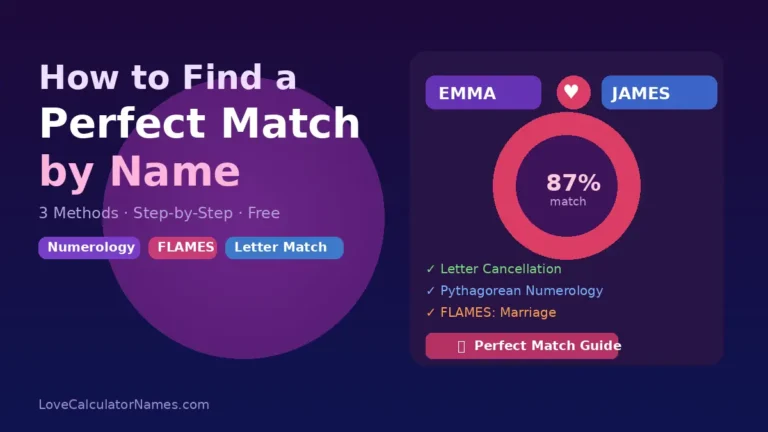
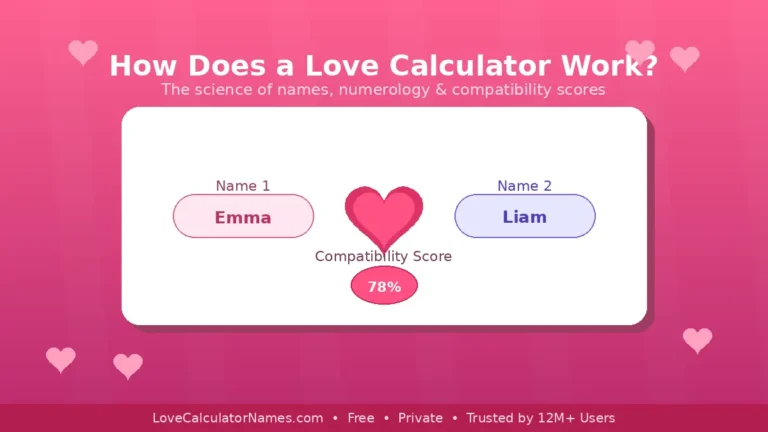
Can numerology be used to check name compatibility between two people? Yes, and it is one of the most popular applications of numerological thinking. When two people’s Expression Numbers or Life Path Numbers reduce to complementary digits, many numerologists consider this a sign of natural energetic alignment. It works as an entertaining and sometimes surprisingly resonant lens for exploring a connection. Take it as interesting input rather than a verdict, and it can be genuinely fun to explore.
The Bottom Line: Lucky Numbers Are More Personal Than They Look
Number 7 carries the most consistent reputation as the luckiest in numerology, and it has for thousands of years, across traditions that developed independently. That kind of cross-cultural convergence is worth taking seriously, even if you hold numerology lightly. Numbers 3, 8, and 9 each bring distinct types of good fortune: creative opportunity, material momentum, and karmic completion.
The number that matters most, though, is yours. Calculating your Life Path from your birthdate and your Expression Number from your name gives you a personally grounded anchor point that universal rankings alone cannot provide.
If you want to take it a step further and see how your name interacts with someone else’s, the free compatibility test at LoveCalculatorNames.com is a good place to start. It draws on the same Pythagorean name-to-number framework discussed throughout this article, takes about 30 seconds, requires no sign-up, and is completely private.
Curious about your match? Use our name calculator to find out right now.